This was several years after my infamous teenage bedroom summoning fiasco—the one where my mother stormed in through a fog of incense like an avenging archangel of domestic safety. I had grown somewhat wiser by then. I had studied more seriously, learned to banish properly, and most importantly, I had moved beyond the adolescent belief that dramatic theatrics equalled spiritual authority.
Yet wisdom arrives in layers. Like an onion. Or perhaps like a grimoire written by someone who had no indoor plumbing.
This particular lesson involved offerings.
Now, many traditions—Goetic, folk magick, certain strands of chaos practice—encourage offerings to spirits. Wine. Bread. Honey. Fruit. Occasionally meat, though I personally find blood-heavy rituals rather unnecessary unless you enjoy attracting every astral parasite within three miles. At the time I had begun experimenting with a more reciprocal relationship with spirits, rather than the domineering nonsense found in medieval texts like the Lesser Key of Solomon, which treats ancient intelligences like they’re employees who failed to submit their timesheets on time.
I prefer partnership. Negotiation. Conversation.
And sometimes… snacks.
So there I was in my early twenties, still Ava then—though the Drakonis persona was beginning to smoulder somewhere in my bones—performing a simple night working.
Nothing dramatic. A small sigil. A candle. A glass of red wine. A dish of honey and bread placed as an offering.
Classic. Elegant. Also… apparently irresistible to mice.
Now, at the time I lived in a somewhat rustic little dwelling. Not quite the mountain hermitage I inhabit today, but certainly not a sterile suburban palace either. Old buildings breathe. They creak. They whisper. And occasionally they host small whiskered tenants who pay no rent. The ritual itself went smoothly. Energy flowed. The air thickened in that familiar way—a pressure change, like the atmosphere before a thunderstorm. I made my petition, offered thanks, closed the circle properly and went to bed feeling rather pleased with myself.
A successful working. Efficient. Mature. “Look at you, Ava,” I thought smugly while drifting off to sleep. “You’re becoming quite the proper magician.”
…
Friends.
Readers.
Seekers of the arcane.
Never trust the feeling that you have become a “proper magician.”
The universe takes that as a challenge.
Morning arrived.
I walked into my ritual space.
And found… chaos.
The offering dish had been dragged halfway across the table. Honey smeared like some sticky sigil of entropy. Bread torn apart in tiny frantic bites.
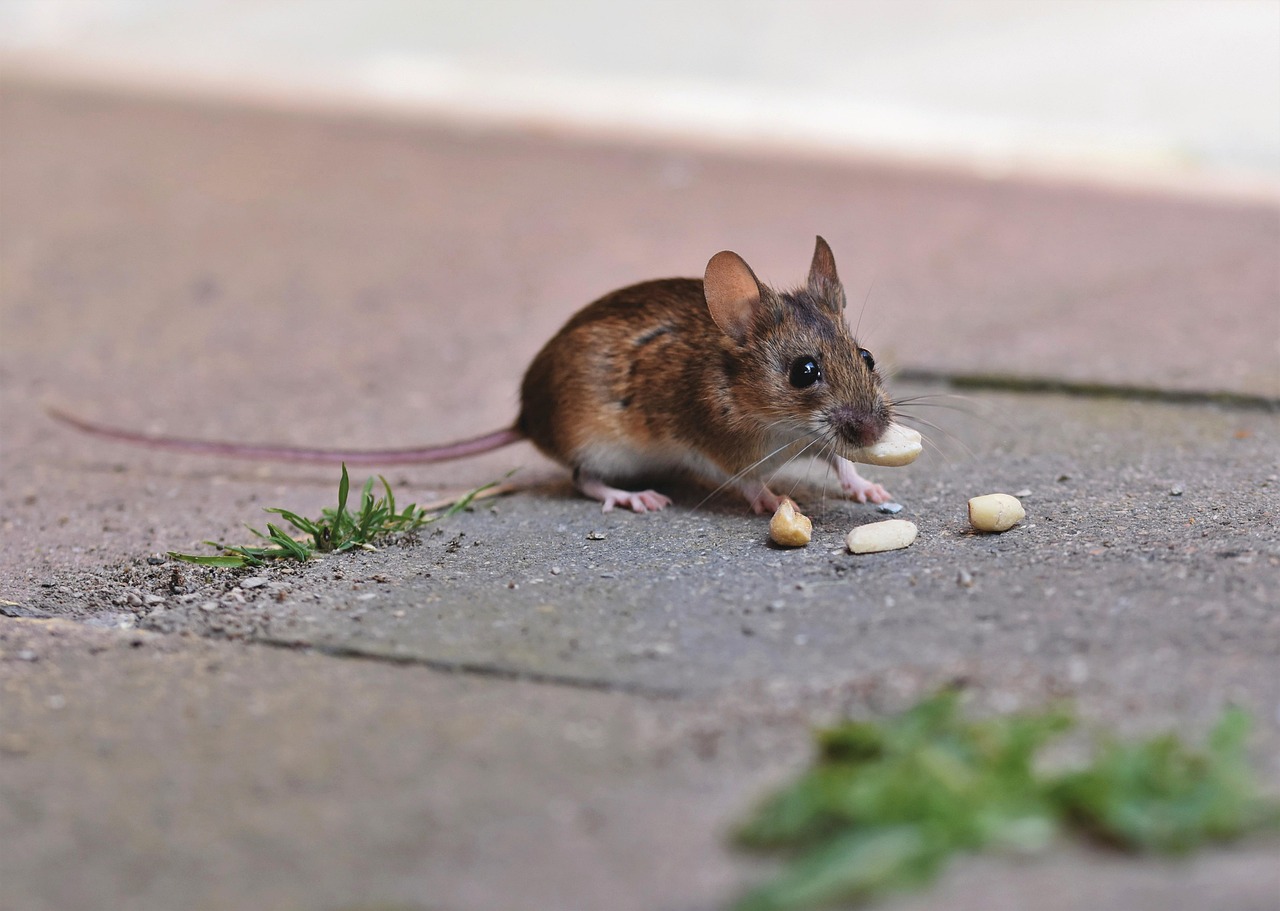
And sitting boldly on the altar—on the altar—was a small grey mouse staring at me with the fearless confidence of a creature who had just robbed a demon.
We locked eyes.
For a long moment.
Two beings. Two intelligences. Both very surprised.
Then the mouse grabbed a chunk of bread and bolted.
I wish I could tell you this happened once.
It did not. Oh no. That first mouse apparently told his friends.
For several nights afterward, my “spirit offerings” became a rodent buffet. Bread disappeared. Honey vanished. One time an entire apple rolled off the altar and was half-devoured behind a stack of books. The spirits, I suspect, found this extremely amusing. And honestly? I cannot blame them. Magick has a way of humbling you through the most mundane mechanisms possible.
Now here’s the deeper lesson—the part beginners rarely consider. Physical offerings are symbolic anchors, not literal meals. Spirits do not require carbohydrates. They interact with the energetic intention of the offering, the attention you give to the act, the subtle charge of gratitude or reciprocity you embed within the gesture.
The physical matter is merely the carrier wave. Leave that carrier wave out overnight in an old building and… well… the local ecosystem will happily participate in your ritual economy. Which is why modern practitioners must learn something medieval grimoires rarely discuss:
Spiritual hygiene includes mundane hygiene. Offerings should be removed after ritual.
Food offerings should be disposed of respectfully—buried, composted, eaten, or otherwise returned to the earth. Do not let them rot on the altar for days unless you are deliberately working with decay spirits… and if you are doing that, you already know the consequences.
And for the love of all dragons and daemons…
Do not leave honey where mice can reach it.
Now these days my offerings are more… controlled. Sometimes wine. Sometimes incense. Sometimes a drawing. Sometimes a simple candle and focused attention. The spirits seem perfectly satisfied. And the mice, alas, must find their meals elsewhere.
Though occasionally—late at night when the cabin creaks and the wards hum quietly—I swear I still feel the echo of amused presence when I place bread on an altar. As if somewhere beyond the veil, a certain entity remembers the night its offering was stolen by a tiny thief with whiskers. And laughs. I laugh too. Because magick, my friends, is a path paved equally with revelation… and embarrassment. Both are sacred teachers.
Hail to the unseen guests of the altar.
—A.V. Drakonis
(And please, tidy your ritual space!)
Leave a Reply