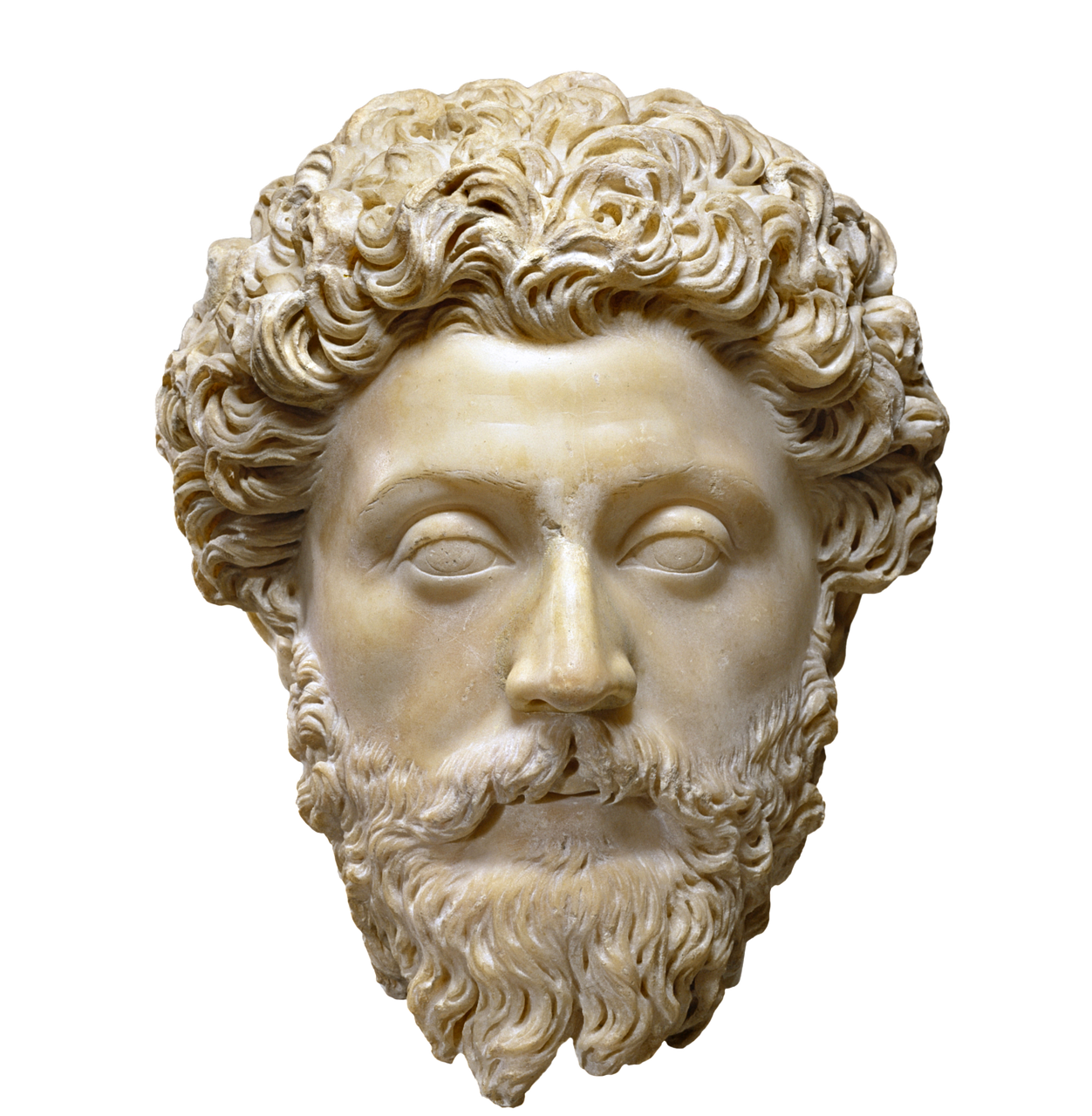
Marcus Aurelius was perhaps one of the most remarkable rulers of ancient Rome. Philosopher-king, Stoic paragon. Many worship his teachings in Stoicism as a map to peace and virtue. Indeed, he had a grip on both discipline and wisdom. As with all great figures, there is a shadow side, a complex undercurrent that shapes their legacy and influence. To me, Marcus is not just a historical figure to be studied. Marcus Aurelius is an integral part of my being. Marcus is my past life, a karmic reflection of the persona I am destined to refine and transcend. His values inspire, his flaws instruct. Through the dichotomy of both, and the integration of their inherent clash, I shaped my occult practice.
The Values: Discipline, Virtue, and Mastery Over Self
Marcus Aurelius embodied the Stoic ideal of self-mastery—the ability to remain calm and resilient amid the storm of life. His Meditations are filled with reflections on the fleeting nature of power and the transient chaos of the human condition. He emphasized the importance of virtue over indulgence, maintaining discipline over the mind’s wild whims, of serving the greater good.
These principles are essential to my own work, especially when it comes to mental magick and self-transformation. The discipline Marcus urged, to resist temptation, to remain steadfast in the face of adversity, is the very same discipline one must hone when performing ceremonial magick. Without an iron will, the forces I call upon would run through my ritual space and wreak havoc in my mind.
Every mage has felt the vampiric drain of an uninvited astral spirit. Control over your space only comes when you control your mind.
Magick demands control, not over others, but over oneself. People like to imagine the most profound power comes from commanding spirits or demons.
I know the truth. True power comes only from mastering the chaos of one’s own psyche. Marcus, my past life incarnation, understood that battles are first won or lost in the mind, and that is a truth I echo in my current life workings.
His famous mantra, “You have power over your mind—not outside events. Realize this, and you will find strength,” resonates deeply. This motto is excellent in the realm of mental magick. The Stoic refusal to be swayed by external circumstances makes for a powerful magician. One who stands tall in the face of both inevitable failure and success. My practice of Draconic Magick—the fierce power of dragons—requires an unshakable core.
The dragons, like the wild barbarian forces Marcus faced, demand respect and absolute certainty of will, not mere supplication.
The Flaws: Detachment, Duty, and Overcoming Stoicism’s Limits
Marcus was not without his flaws. In recognizing and integrating those flaws and the lessons from them, my practice grows stronger. There is a detachment in Stoicism. Stoics aim to achieve an almost monastic distance from the world. This distance teaches you to accept things as they are, to endure suffering, to quell desires. Admirable, certainly, yes. For an occultist—particularly one of my ilk, who seeks not only to navigate the currents of fate but to reshape them—this can be a dangerous limitation. With acceptance, ambition fades away and the flame of desire kindles a pathway towards great power. How does one balance the divine pursuit against the divine acceptance?
Stoicism preaches passivity toward the cosmos.
“The universe is change,” Marcus often said. While the Stoic may accept that change, the mage must be its master. I cannot simply observe the fire! I must become it, wield it, direct it! I am the fire! The cosmic forces Marcus urges us to accept as part of a greater, unknowable plan… those are the very forces I seek to bend to my will! When I reach into the astral plane to evoke a demon or connect with a draconic force, I am not bowing to fate; I am Fate itself! The crafter! The maker!
Marcus Aurelius spent his life in duty for the sake of Rome. A life at the expense of his own personal joys, forsaking individual desires. There is a downside to such sacrifice. To continually deny oneself without ever indulging in the material or spiritual fruits one has earned can lead to spiritual stagnation. I believe I must integrate and master the balance of duty and desire.
The lessons of alchemy, which form the bedrock of Hermetic thought, teach us that the union of opposites—the material and the spiritual, desire and discipline—is what creates the perfected philosopher’s stone. I take this lesson to heart.
In my own practice, I don’t shy away from desires. I embrace my lust for power, my hunger for knowledge, my desire for mastery over the art of transformation. These passions that fuel my magick. While Marcus would have taught us to temper such desires, I have learned that to wield true magick is not to suppress but to channel these primal urges into something more. The dragon itself is not a placid, contemplative creature; it is the embodiment of fury and ferocity, and only through embracing that energy can I wield its power.
The Evolution: From Stoic to Magus
It is this very tension between control and chaos that shapes me, A.V. Drakonis. I strive for the discipline of Marcus! I ache to know an understanding of his unwavering sense of purpose and his devotion to the greater whole. I also reject the notion that we must be mere observers of cosmic play. My magick seeks to transcend his limitations, to take the detached wisdom of the Stoic and apply it to active creation.
In my journey, I’ve taken Marcus’s teachings about duty to self and duty to the world, and I’ve woven them into my magick. Duty no longer means the limiting constraint of self-sacrifice for a larger whole, but instead self-transformation that serves both my goals and the betterment of the universe. A true magus understands that by improving oneself—by sharpening mind and spirit—they improve the cosmos.
As above, so below! We are all mirrors of the great macrocosm.
What Marcus Aurelius saw as a river, I see as clay to be molded. Where he sought inner peace, I seek inner power. And while his quiet contemplation made him great, my magickal journey demands that I summon, invoke, and command the forces he observed. He teaches me when to be patient, when to endure, but also, by contrast, he shows me when to break free from the stoic chain and claim my own sovereignty. I choose to integrate his values and also learn from his flaws, freeing myself from the karmic chains of the grasp of Rome!
Rome might have to be another blog post. The Fall of Rome is a little political, but I think it’s a little relevant today too.
While Marcus Aurelius inspires my discipline and self-reflection, it is in breaking away from his limits—embracing my own passions, my desires for power, and my role as a creator of fate—that I fully become the godhood of A.V. Drakonis.
I am a soul who understands both control and chaos, both virtue and vice, and who chooses not just to accept the universe, but to command it.
What limits do you need to embrace and integrate in your shadow side before you can discover true power?
This is my path. This is the power Marcus Aurelius inadvertently passed down to me—not by what he mastered, but by what he failed to achieve. And it is here, in this fertile ground of paradox, that my magick grows most fierce.
Leave a Reply