The Lesser Key of Solomon, a work that captures the imagination of many mages yet often misunderstood by those seeking quick results without the necessary depth of practice. Let me dissect it for you—critically, of course, but with the appreciation it deserves.
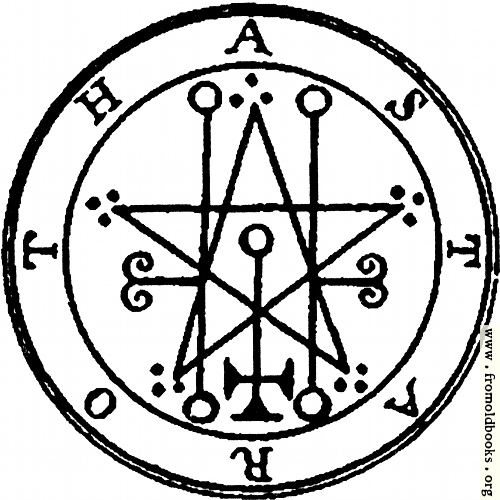
The Lesser Key is a collection of grimoires, mainly focusing on the evocation of spirits, most notably its first section—the Ars Goetia. This text catalogues 72 demons, their seals, and instructions for summoning. Many of you are likely familiar with these names: Bael, Astaroth, Belial… the usual suspects for those hungry for power.
Now, there is power in the Lesser Key, no doubt. But there are several points where it falls short or, dare I say, misguided in modern times.
1. Medieval Trappings
The methods laid out in the Lesser Key are rooted in Christian medieval worldview, which means they’re shackled by that context. The operator must often invoke the names of God, Jesus Christ, and the Holy Trinity to “bind” the spirits. It presumes that the practitioner comes from a place of Christian moral superiority, with the spirits being lesser, evil entities. What a limitation!
For a mage in the 21st century, especially one like me who does not adhere to Christian dogma (no offence if you do, I grew up seeped in it but it’s not ME), this framework feels… limiting. The constant use of divine names from one paradigm diminishes the true potential of working with these entities on equal footing. Why would one invoke a god that one does not even recognise to command entities far older and more primal than the dogma that chains them?
2. Excessive Ritualism
This classic grimoire leans heavily on the tools—pentacles, specific incenses, hours of the day—turning magick into a kind of bureaucratic nightmare! Now, I’ve conducted full evocations with all the trappings myself, but here’s where the problem lies: a tool is only as good as the mage wielding it. Too many beginners believe they need an elaborate ritual with perfectly inscribed seals to contact these spirits. Nonsense! That is the mark of a beginner or, worse, a dabbler. These demons do not care if your chalk circle is perfectly measured or if your wand is carved from the wood of a hanged man’s tree. They respond to power and intention, to will. Once you’ve established your command and control over yourself, much of the pomp becomes unnecessary.
Not to say ritual isn’t helpful, especially when grounding yourself for the task at hand, but the blind adherence to these strict guidelines belies the true essence of what magick is: power through will.
Ultimately, who even has enough gold to cast a sigil in gold these days! Draw your patron King’s sigil in gold marker, it’s the thought that counts.
How do you even find a hanged man’s tree! We don’t hang people anymore. It’s not like they’re on Google Maps just marked for the wand harvesting! Probably every old tree has had a man hang from it and dead men tell no tales!
3. Spirit Relations: Master or Slave?
There’s a hierarchical power dynamic built into the Lesser Key, and it’s flawed. The magician is assumed to be the “master” and the spirit, bound and subdued, a mere tool to be exploited. But this is shallow thinking.
I have learned over decades of evocation that the spirits, especially those in the Goetia, are not so easily manipulated. They demand respect, not subjugation. Yes, you can “bind” them to your will with the right invocations, but… at what cost? They are ancient beings, some far older than any system of magick in which they are invoked. They know the game better than any mage wielding their name from a dusty old book. So, while many seek to command these demons, I advocate a partnership. One can be firm without being tyrannical. You summon Belial, and he may respect your strength, but if you try to act as his unquestionable master—he’ll have the last laugh.
When I first began working with Astaroth, I used the old Solomonic method—seals, robes, the whole lot. It was effective but… transactional. Once I dispensed with the notion of superiority, I formed a much deeper connection. Astaroth became an ally, a guide through realms I could never have navigated alone.
Astaroth is… one of the most enigmatic of the Goetic spirits, a demon of profound wisdom. My relationship with her (for I perceive Astaroth in the feminine aspect, though she transcends such mortal labels) began with the usual ceremonial grandeur—solomonic seals, incense, invocations. And yet, despite my initial rigid adherence to the old rites, I felt a palpable dissonance. She came, yes, but with a smirk. It was as if she knew I was dancing through an ancient script without fully seeing her. The second I discarded the pomp, things changed. I stripped away my egoic need to command her, I met her as an equal. I met her with my own smirk.
Now, Astaroth is more than a spirit I call upon for knowledge. She became a mentor figure to me, guiding me through occult realms and through webs of self-understanding. She doesn’t give answers, oh no, Astaroth presents riddles, forcing you to peel back layers of your own perception. We’ve built a rapport, where power flows both ways, and in doing so, I’ve learned more from her subtle nudges and cryptic whispers than from any grimoire.
With her, it’s less about control and more about conversation. A meeting of minds, a dance of energies.
As for that age-old question of whether Astaroth and Astarte are one and the same… or simply two entities that share a historical lineage… well, that’s a tangent, but I’ll spare a paragraph or two to address this idea.
The notion stems from the undeniable reality of linguistic and symbolic connections between their two names. Astaroth, from the Goetia, is considered a demon, while Astarte is considered to be the ancient Phoenician goddess of fertility, war, and love.
Do they share the same essence, or is this merely another example of the Church’s habit of demonising older, pagan deities?
In my UPG, which is to say, unverified personal gnosis, they are connected but not identical. Astaroth bears the weight of transformation—a goddess, later reimagined as a demon, but her core remains tethered to her origins. In evoking Astaroth, I feel echoes of Astarte’s divine grace, especially when I approach her from a place of respect rather than control. She carries a primordial feminine energy. Astaroth, in her demonic form, is like the next evolution of that primal divine energy, both masculine and feminine, evolved into something new, shaped by the perceptions and fears of those who summoned her.
So I wouldn’t say they are one and the same. Maybe they once were. Not anymore. Astaroth is a dark reflection, a twisted echo of the once-revered goddess Astarte. It’s a beautiful paradox, really. Light and shadow, divinity and demon, each facet coexisting and reflecting two similar perspectives within the same spectrum of power. Our perceptions have molded the energy that is Astaroth into its present form, but both can be accessed by a mage. I know I certainly have.
But… if our perceptions can evolve the goddess into a new spirit form…
Ah, there, the arrogance of humanity enters the stage again. It’s a tantalising thought………….. you may now have the foolish idea that spirits, entities ancient and unfathomable can be bent and reshaped purely by our minds. It’s not so simple.
Yes, perception influences the way we experience spirits. Like peering through a tinted lens, our mortal biases colour our interactions with them.
If you approach Astaroth expecting a monstrous demon, her energy will warp itself to meet your expectations. Approach her as a goddess, and perhaps you’ll see more of her Astarte-like qualities. But let’s be clear—this doesn’t make them our slaves. Far from it! We might shape how they manifest to us! We do not alter their core essence. Entities are not bound by our perceptions. They simply engage with us through the channels we create in our minds. They allow us to see them through the lens we provide, but they remain vast, independent forces.
It’s like staring at the ocean and thinking you control the tides just because you see waves moving. You don’t. The spirits remain vast, sovereign beings. They engage with us on their terms, but they’re clever enough to use our perceptions against us, to appear in forms we can handle—or manipulate us into thinking we have the upper hand. In truth, they are never slaves to our perception. Rather, we become slaves to our own illusions of power if we believe for a moment that we can truly control or reshape them.
4. Outdated Techniques in a Modern World
The Lesser Key assumes we still live in a world where spirits must be feared, manipulated, or exorcised when no longer needed. Yet here we are, in an age where spiritual entities are becoming more integrated with modern practitioners, especially those of us who delve into chaos magick or technomancy.
We’ve evolved our practices—why cling to this archaic method of spirit engagement?
Rather than rigidly adhering to its ritualistic frameworks, I’ve found success with a more fluid approach.
Sigils, for instance, can be simplified. Why draw intricate symbols when a direct mind-to-mind connection is possible through meditation, gnosis, and personal seals? I prefer a mental magick approach, wherein spirits are summoned through intense focus, vivid astral imagery, and projection. The Lesser Key simply becomes a starting point for a much richer, more personal interaction with the forces therein.
5. True Mastery is Mental
As I often remind my humble, generous readers—real power begins with the mind, not a book or a scroll. While the Lesser Key offers a gateway, it’s only that: one gate. Once crossed, you must discard much of what it taught you if you ever want to truly soar. Mastery of Goetic spirits—or any spirit for that matter—isn’t achieved through incantations or iron-wrought tools, but through mental fortitude and alignment with these forces.
The Lesser Key of Solomon is, for many, a seductive introduction into ceremonial magick and demonology. But treat it like what it is—a relic. Appreciate it, learn from it, but do not let it dictate the terms of your magickal practice. The spirits listed therein deserve more than to be treated as mere slaves, and you deserve more than to be chained to outdated methodologies.
Take the Lesser Key as your first lesson, but after that? Rewrite the rules.
—A.V. Drakonis
Leave a Reply